

Fair ESG Initiative
The Fair ESG Initiative was established in 2023 to ensure a place at the ESG table for companies from the Global South, their employees, and their communities. It aims to give a voice in particular to small and medium enterprises which are the economic lifeblood of the Global South. FESGI subscribes to the laudable goal of enhancing sustainability in the environmental, social and governance domains as aspired by ESG. However, it emphasizes that sustainability should be pursued in a fair manner.
Thus, ESG is a response to the shortcomings of capitalism, which became apparent in particular during the 2008 banking crisis, but which had been noted and criticized before by many commentators, especially in the Global South. ESG is meant to make capitalism more acceptable and palatable by tying it to environmental, social and governance standards. This, therefore, is a relative recent phenomenon in the Global North. However, in the Global South stewardship of the environment and giving back to the community have been hallmarks of company policy already for centuries and sometimes even millennia. After all, subsistence thinking originates from the Global South. Therefore, ESG should embrace and emulate rather than replace corporate social behaviour of Southern companies.
ESG benchmarks, ratings and audits are mainly produced in the Global North, but they should also do justice to the efforts made by Southern companies. This means that the fact that Southern companies usually are part of the informal economy, while they feel bound more by culture than legislation, should not be held against them. Credit should be given to Southern companies where credit is due, regardless of the economic, cultural and political environment in which they operate.
In view of the above, FESGI represents the interests of Southern companies, their workers and their communities. It does so by publicly drawing attention to fairness issues, by representing the interests of Southern businesses in conversations with Northern actors and by conducting research. The main focus of FESGI is the social column of ESG, which includes human rights. FESGI is a consortium of companies and academics, the membership of which is free. Members are regularly consulted on current issues and are kept informed about relevant developments.
The FCSRI is constituted by a heterogeneous consortium of academic and business communities across Europe, Asia and Africa. It cultivates productive relationships with national governments and international organisations that demonstrate sensitivity to the concerns of affected communities and businesses in the Global South. It also enjoys close ties with the Cross-Cultural Human Rights Network, a cooperative arrangement of human rights experts primarily from the Global South, established in Beijing in 2014. Its founding members Crosscultureel BV and Law4Sustainability Solutions –contribute significant expertise in business and human rights across the South-North divide.
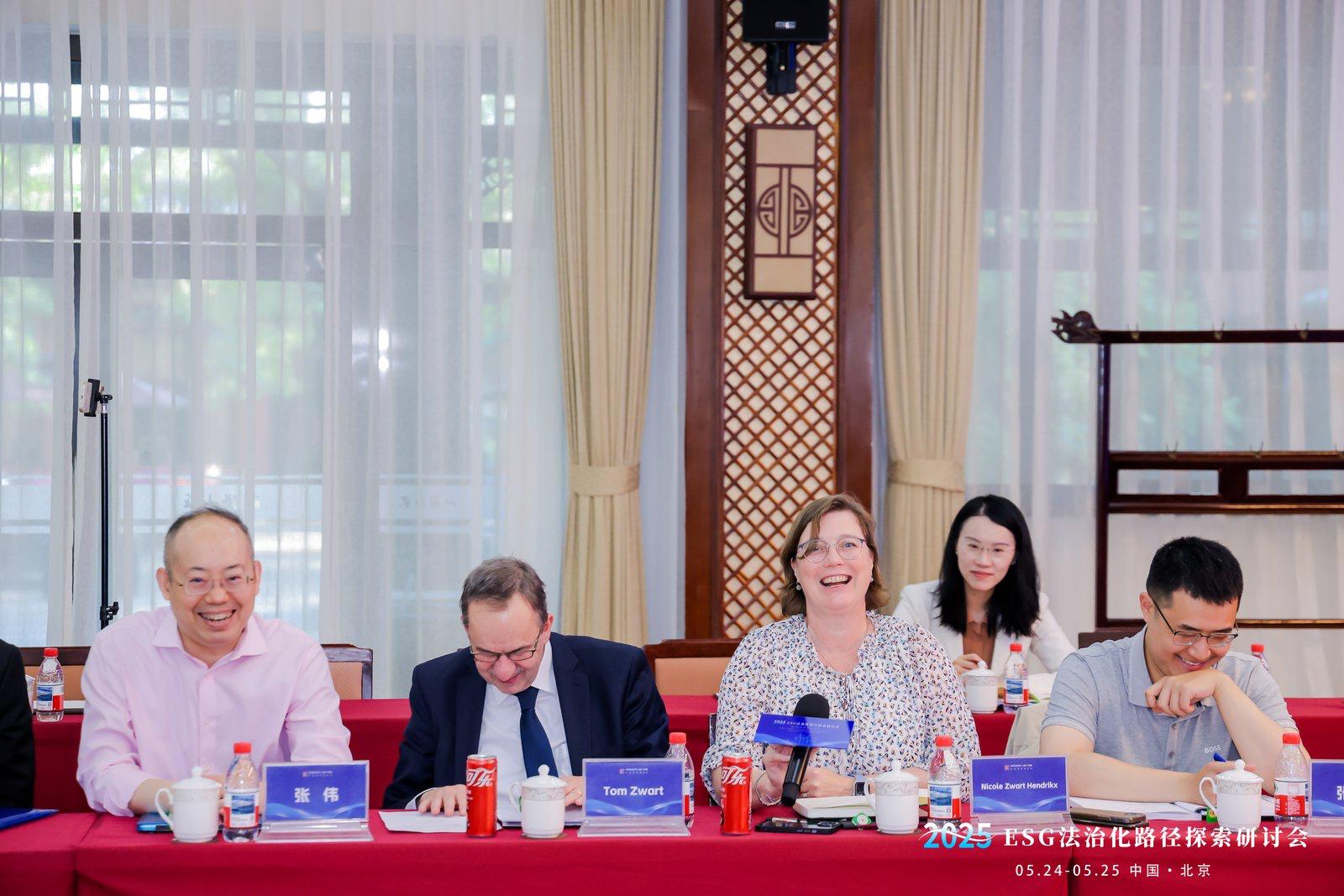
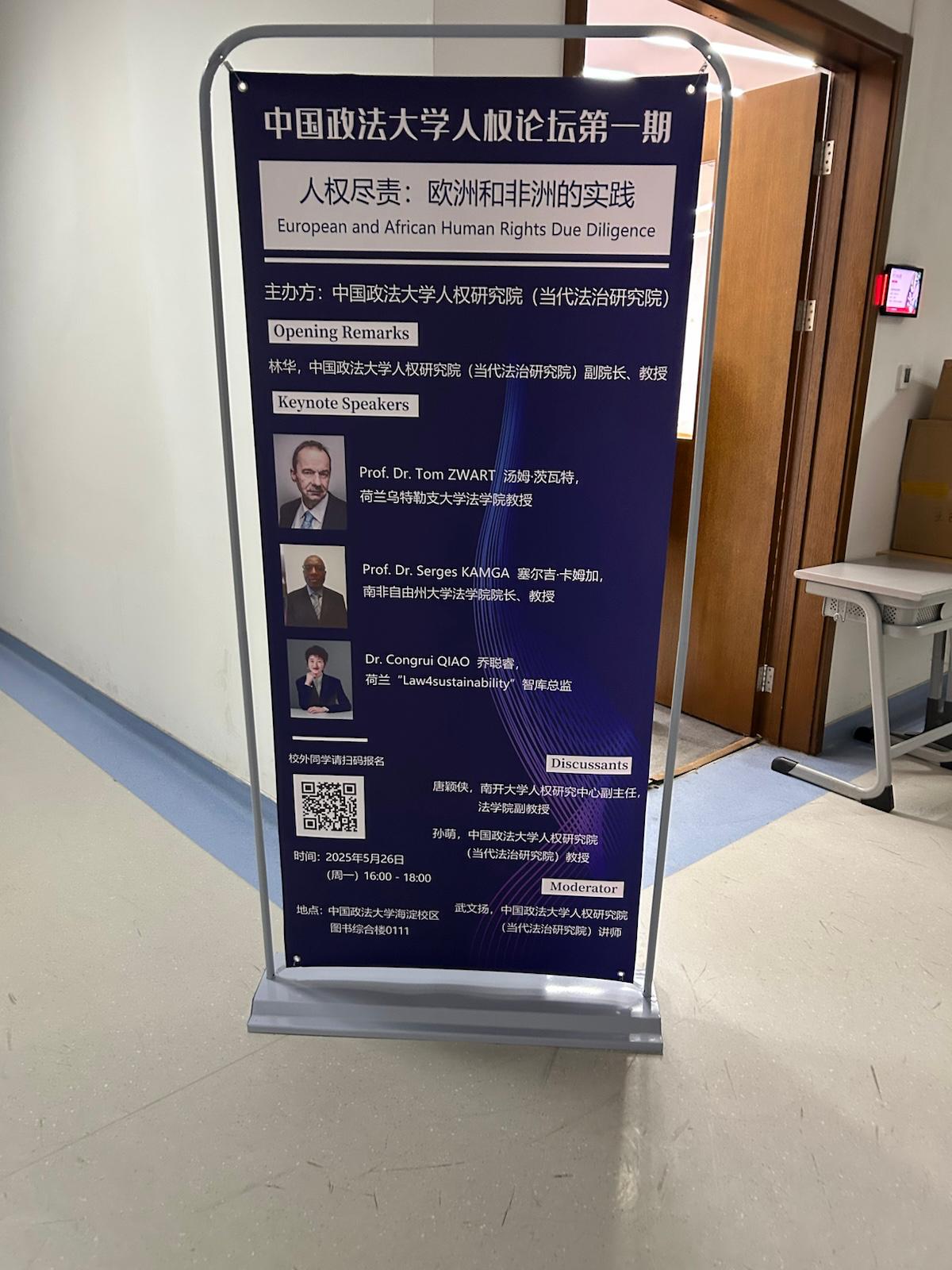
The executive committee consists of Prof. Tom Zwart, Nicole Zwart-Hendrikx LLM, Dr. Cong-rui Qiao Law4sustainability, Dr. Yulia Levashova, Prof. Serges Kamga. Diana Mbaraka Salugole is the regional manager for Africa.


The EU’s regulatory adjustments—including the so-called “omnibus” deregulation, the United States’ shift towards protectionism in 2018 has prompted Chinese companies to cultivate a positive international reputation and enhance their global competitiveness. In the meanwhile, China’s accelerated development of ESG legislation and corporate compliance, together with its normative outreach through BRICS and the Belt and Road cooperation, is reshaping the global governance environment for responsible business conduct.
However, the limited recognition of these efforts by Northern counterparts perpetuates a lack of common understanding and fuels biased assumptions that undermine the ability of Southern companies to compete on a level playing field on the one hand and leads to additional costs for Northern companies in shifting their business relations away from China on the other hand. To help businesses deal with these challenges, the Fair ESG Initiative (hereafter: FESGI) was launched in the Netherlands in 2023.
The FESGI aims to help (Southern) companies navigate ESG compliance tools and promote a fair global marketplace. Specifically, the FCSRI adopts a double-phase strategy that intertwines two strands. The first strand assesses the existing ESG regulations established by Northern actors to assist companies in mitigating the relevant liabilities and to provide practical guidance. While this strand focuses on the regulatory status quo in the North, efforts are underway to align emerging business strategies and compliance practices with an ESG regime that is more responsive to the characteristics and needs of the South.
The second strand has a politico-cultural character and aims to restore the power balance between the North and South in standard-setting. This strand emphasises the fact that companies in the South have a long tradition of corporate social responsibility in their own forms and on their own terms, which should be recognised and utilised for global public good. It helps companies prioritise their own/local CSR efforts (i.e. a micro-evidence approach) rather than those of the government of the country in which they operate (i.e. a macro-evidence approach), and to oppose the weaponisation of ESG in trade wars.
FESGI 及其研究负责人简介
近年来,欧盟对境内及供应链企业的ESG义务进行了监管调整,其中包括所谓的“综合松绑监管”(omnibus deregulation);美国自2018年起则转向贸易保护主义。与此同时,中国在ESG立法方面不断提速,并通过金砖机制与“一带一路”合作框架推动负责任商业的规范倡议。中国企业亦日益塑造良好国际声誉,以提升全球竞争力。这些区域性国家立法与企业合规之间的差异,正重塑全球负责任商业行为的治理格局。
然而,北方国家及ESG从业机构对中国及全球南方企业在此领域所做努力认可有限,导致双方缺乏共识,并滋生出偏见性假设。此种局面不仅削弱了南方企业在国际市场上的公平竞争能力,也使北方企业在调整对华商业关系时承担额外成本。
为协助中国及全球南方企业应对上述挑战,“公平ESG倡议”(Fair ESG Initiative,下简称FESGI)于2023年在荷兰成立。FESGI旨在帮助南方企业有效运用ESG合规工具,构建更加公平的全球市场环境。FESGI采取“双轨”战略、开展研究与咨询工作:
第一条路径侧重评估北方国家主导的现有ESG监管体系,并为非欧盟企业提供战略指引。在追踪和解释欧洲监管政策的同时,FESGI亦致力于促进南方企业特征与北方监管体系的衔接。
第二条路径旨在重构南北双方在监管标准制定中的权力平衡,反对将监管政策工具化为贸易限制手段。南方企业在自身发展语境中已形成独特的企业社会责任传统,这些经验应得到充分认可,并为全球公共利益服务。FESGI倡导企业以自身或本地的负责任商业实践为优先依据(即“微观证据导向”),而非仅依赖所在国的环境与人权政策作为主要参考(即“宏观证据导向”)。
FESGI由Law4Sustainability智库与Crosscultureel公司共同发起,两家机构在“商业与人权”领域具备跨越南北界限的深厚专业积累。FESGI汇聚了来自欧洲、亚洲与非洲的学术与商业联合体,并与“跨文化人权网络”(Cross-Cultural Human Rights Network)保持密切合作。“跨文化人权网络”成立于2014年北京,主要由来自全球南方的人权专家和智库研究员组成。
FESGI学术负责人为汤姆·兹瓦特博士与乔聪睿博士。汤姆·兹瓦特现任荷兰乌得勒支大学跨文化法学教授,研究聚焦于法律与文化的互动关系。他是“跨文化人权网络”的创始人兼秘书长,长期致力于向北方社会引介南方国家的人权观念与实践。兹瓦特教授曾担任荷兰副首相高级法律顾问,以及荷兰驻欧盟的欧洲与法律事务司司长。
乔聪睿博士为欧洲委员会“政策知识平台”及荷兰政府“中国知识网络”注册法律与政策专家。她曾于阿姆斯特丹自由大学(2018–2024)、阿姆斯特丹大学(2022)及安特卫普大学(2023)担任高级讲师与研究员,持有荷兰高校教师资格认证(2023),并于乌得勒支大学法学院获国际法与欧盟法博士学位(2018)。乔博士现任荷兰国家级智库研究员,参与多项关键政策的研究与建议工作,包括《负责任商业行为》(2026)、《先进技术的出口管制》(2025)及《可持续中欧知识伙伴关系》(2024)。
 Crosscultureel